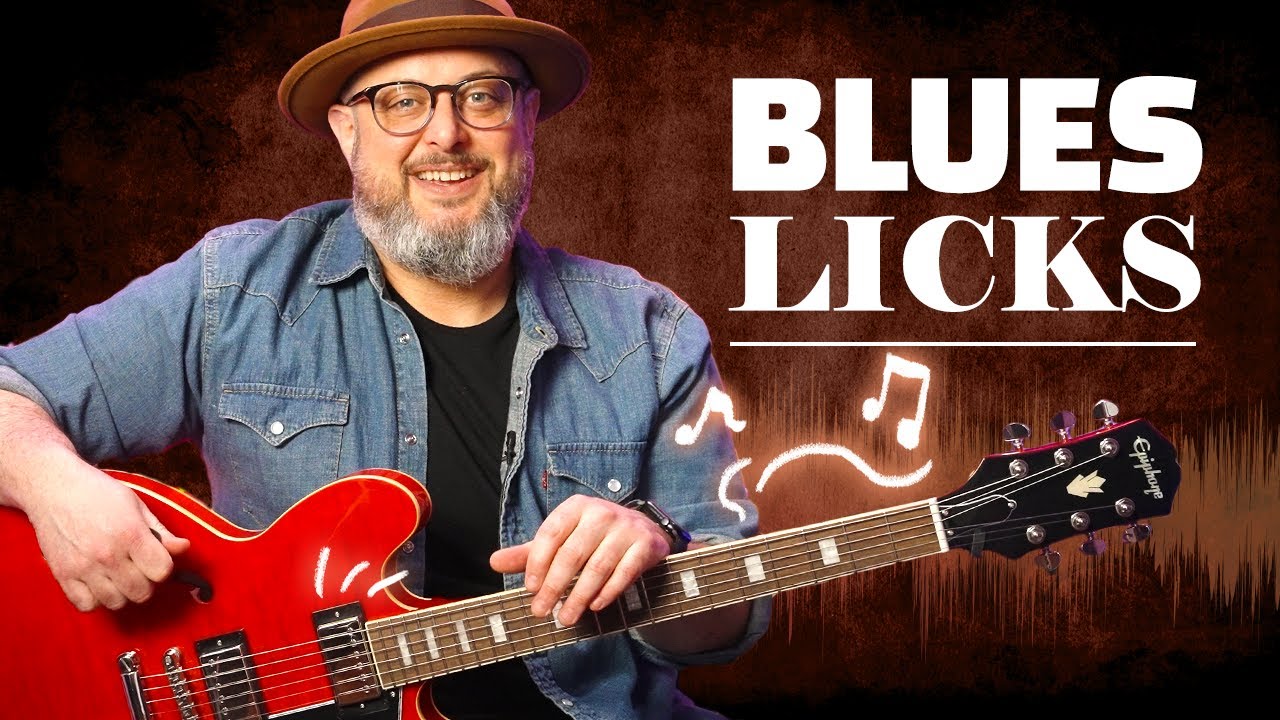
The Foundation of Modern Guitar
Blues licks are short musical phrases—usually 2-4 bars—that capture the soul of blues guitar. These are the building blocks that BB King, Muddy Waters, and Stevie Ray Vaughan used to create their legendary sounds. Whether you’re playing electric or acoustic, delta or Chicago style, mastering blues licks gives you a complete vocabulary for expressing yourself on the fretboard.
From the Mississippi Delta to Chicago’s electric blues clubs to modern blues-rock, these phrases have shaped guitar playing across rock, jazz, country, and beyond. The beautiful part? You don’t need hundreds of licks—a handful of well-executed phrases, played with proper feel and timing, will carry you further than memorizing every lick ever recorded.
What Makes Blues Licks Work
The blues scale—minor pentatonic with an added flat 5—creates that characteristic tension and release. Most blues licks live here, using just six notes to create endless variations. But the magic isn’t in the notes themselves. It’s in how you bend them, how you add vibrato, how you space your phrases.
Think of it like speech. The same words can convey completely different meanings depending on delivery. Blues licks work the same way. A quarter-tone bend at the right moment says more than a flurry of perfectly executed notes ever could.
The Essential Techniques
String bending is fundamental—especially bending the minor 3rd up to the major 3rd. This creates that vocal quality that makes the guitar sing. Start with half-step bends, work up to whole steps, and always use a tuner to train your ear.
Vibrato adds life to sustained notes. BB King’s wide, controlled vibrato is instantly recognizable for a reason. It turns a simple bent note into an emotional statement. Practice varying the width and speed of your vibrato to match different musical contexts.
Slides, hammer-ons, and pull-offs connect your phrases smoothly. These techniques create flow and help you build longer phrases from smaller pieces. The goal is to make your licks sound conversational, not like you’re playing exercises.
How to Actually Learn This Stuff
Start slow. Seriously. Blues is about groove, not speed. Work with a metronome and focus on getting each note clean and in time before worrying about anything else.
Play over backing tracks. Context is everything. A lick that sounds great in isolation might not work over actual chord changes. Practice your licks over 12-bar blues progressions to develop timing and musical judgment.
Listen more than you practice. Spend time with BB King, Albert King, Freddie King. Notice their phrasing, their timing, how they use space. The best education comes from your ears, not your fingers.
Learn Blues Licks Below
Browse our collection of blues guitar licks below. Each lesson breaks down the techniques, shows you the fret positions, and gives you practical tips to master these essential blues phrases.